Best Acne Scar Treatments in Dubai: Complete Guide (2026)
Discover the best acne scar treatments in Dubai at Rere Polyclinic. Laser resurfacing, microneedling, chemical peels & more—DHA-licensed doctors, Dubai Jumeirah.
Byadmin
You cleared the acne. Now the scars remain—and they can feel just as frustrating. In Dubai, where sun exposure and humidity affect skin year-round, acne scars tend to look darker and more persistent than in cooler climates. The good news: modern dermatology has transformed what’s possible.
At Rere Polyclinic in Dubai, our DHA-licensed dermatologists treat acne scars daily using the latest laser technology, microneedling protocols, and combination therapies tailored for all skin tones—including Fitzpatrick Types IV–VI, which are common in the UAE’s diverse population.
This guide covers every proven treatment option available in Dubai in 2026, what each one does, how many sessions you’ll need, and how to choose the right approach for your skin. Whether your scars are ice-pick, rolling, boxcar, or post-inflammatory hyperpigmentation (PIH), there’s a solution that works.
Which Type of Acne Scars Do You Have?
Select your scar type below to see the recommended treatment at Rere Polyclinic.
The gold-standard combination for ice-pick scars — precision acid treatment followed by laser resurfacing.
Releases tethered scar tissue beneath the skin, then rebuilds collagen — ideal for rolling texture.
Ablative resurfacing removes scar edges while stimulating 40% new collagen per session.
Accelerates cell turnover and breaks down melanin clusters — the fastest fix for dark marks.
DHA-licensed · Dubai Jumeirah· Free assessment when you mention this page
What Are the Best Acne Scar Treatments Available in Dubai?
The best acne scar treatments in Dubai include fractional CO2 laser, microneedling with PRP, chemical peels, subcision, and dermal fillers—chosen based on scar type and skin tone.
In 2026, Dubai clinics offer a full spectrum of FDA-cleared and CE-marked devices for scar remodelling. The right choice depends on four variables: scar morphology (ice-pick, rolling, boxcar, or PIH), skin tone (Fitzpatrick Type I–VI), downtime tolerance, and budget.
The Main Scar Types and What Treats Them Best
| Scar Type | Description | Best Treatment(s) |
|---|---|---|
| Ice-Pick | Deep, narrow, pore-like | TCA Cross, fractional laser |
| Rolling | Wavy, uneven surface | Subcision + PRP, RF microneedling |
| Boxcar | Wide, defined edges | Fractional CO2, punch excision |
| PIH | Dark flat marks (not true scars) | Chemical peels, laser toning, topicals |
| Hypertrophic | Raised, thick tissue | Steroid injections, pulsed dye laser |
According to the American Academy of Dermatology, combination treatments—using two or more modalities in the same program—consistently outperform single-treatment approaches for atrophic acne scars.
At Rere Polyclinic, every acne scar consultation begins with a scar mapping assessment to categorise each scar type before designing a personalised protocol.
Which Laser Treatment Works Best for Acne Scars in Dubai?
Fractional CO2 laser is the gold standard for acne scars in Dubai, stimulating up to 40% new collagen growth per session with 3–5 days of downtime.
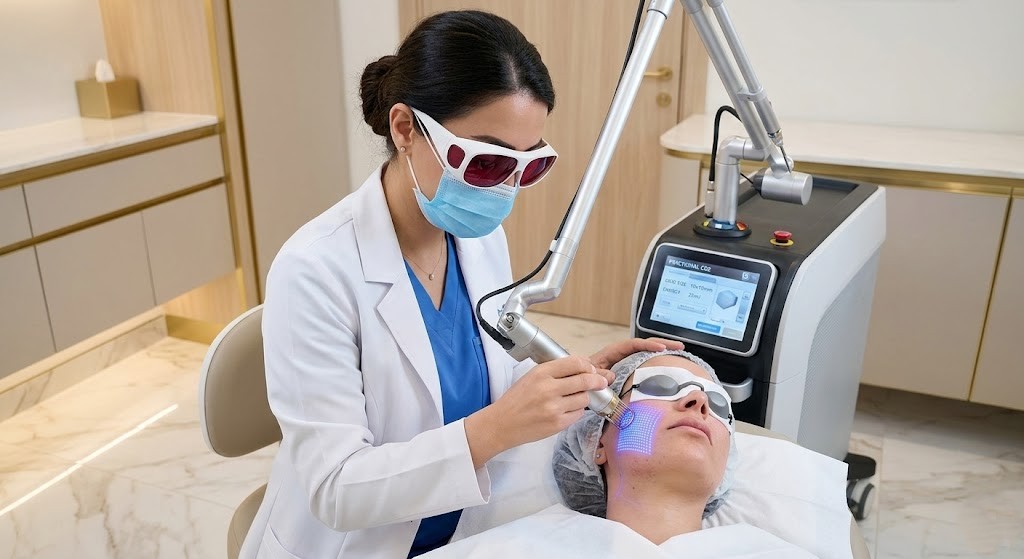
Fractional laser resurfacing remains the most studied, most effective single-device treatment for atrophic acne scars in peer-reviewed literature. The laser delivers thousands of micro-columns of energy into the dermis, triggering a controlled wound-healing response that generates new collagen—the structural protein responsible for smooth skin texture.
Fractional CO2 Laser vs. Erbium Laser: What’s the Difference?
Both are ablative fractional lasers, but they work differently:
- Fractional CO2 (e.g., Lumenis UltraPulse): Deeper penetration, stronger collagen remodelling, more downtime (3–5 days redness and swelling). Ideal for moderate to severe atrophic scars.
- Fractional Erbium (e.g., Sciton ProFractional): Shallower ablation, faster healing (1–3 days). Better for mild scars and darker skin tones.
A 2023 study in the Journal of Cosmetic and Laser Therapy found that fractional CO2 laser achieved a 50–80% improvement in rolling and boxcar scars after 3 sessions in patients with skin types II–IV.
Is Laser Safe for Dubai’s Diverse Skin Tones?
Yes—with the right settings. Darker skin tones (Fitzpatrick V–VI) require lower fluence, longer pulse intervals, and careful post-treatment care to prevent post-inflammatory hyperpigmentation (PIH), a risk when aggressive lasers are used without melanin consideration.
At Rere Polyclinic, our dermatologists are trained in treating all Fitzpatrick skin types present in Dubai—Arab, South Asian, African, and mixed heritage skin—adjusting laser parameters individually to maximise results and minimise PIH risk.
Non-Ablative Laser Options for Sensitive Skin
For patients who can’t tolerate downtime or have very dark skin tones, non-ablative laser toning (e.g., Nd:YAG 1064nm) and pulsed dye laser (PDL) offer gentler collagen stimulation with minimal social downtime. Results are more gradual, typically visible after 4–6 sessions.
How Does Microneedling with PRP Treat Acne Scars?
Microneedling creates controlled micro-injuries that trigger collagen repair; adding PRP amplifies healing by up to 30%, making it ideal for rolling scars.
Microneedling—also called Collagen Induction Therapy (CIT)—uses a device tipped with fine needles (0.5mm–2.5mm depth) to create thousands of micro-channels in the dermis. This mechanical stimulus triggers the skin’s natural wound-healing cascade: fibroblasts activate, collagen and elastin production accelerate, and scar tissue gradually remodels.
What Is PRP and Why Is It Added?
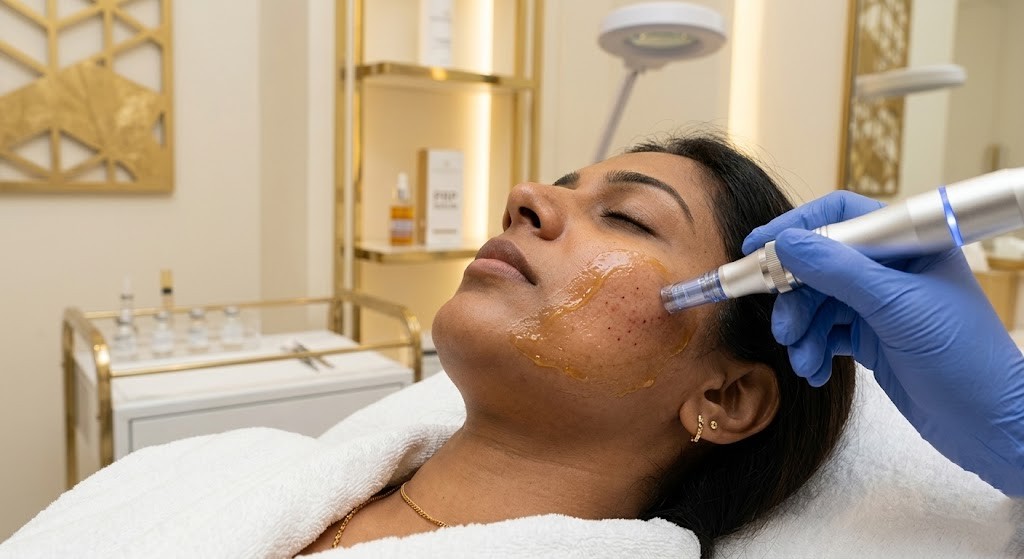
PRP (Platelet-Rich Plasma) is prepared from the patient’s own blood. A small blood draw is centrifuged to concentrate platelets, which are rich in growth factors (PDGF, TGF-β, VEGF). When applied topically or injected during microneedling, these growth factors accelerate collagen synthesis and angiogenesis—blood vessel formation that brings nutrients to healing tissue.
A 2022 meta-analysis published in Dermatologic Surgery comparing microneedling alone vs. microneedling + PRP found the combination produced significantly greater improvement in scar depth and texture, with a 25–35% better outcome score.
RF Microneedling: The Advanced Upgrade
Radiofrequency (RF) microneedling (devices like Morpheus8 or Lutronic Genius) combines mechanical needling with radiofrequency energy delivered at the needle tips. This heats the dermis at precise depths (1.5mm–4mm), creating a stronger collagen remodelling signal than standard microneedling alone.
RF microneedling is particularly effective for:
- Deep rolling scars
- Overall skin laxity combined with scarring
- Patients who want results with minimal surface downtime
At Rere Polyclinic, we offer both standard PRP microneedling and RF microneedling, and our dermatologists will recommend the appropriate technology based on your scar depth map.
How Much Do Acne Scar Treatments Cost in Dubai?
Acne scar treatments in Dubai range from AED 500 for chemical peels to AED 3,500+ per fractional laser session, depending on technology and treated area.
Dubai’s aesthetic market spans a wide pricing range. Here’s a transparent breakdown by treatment type:
Acne Scar Treatment Price Guide – Dubai 2026
| Treatment | Price Range (per session) | Sessions Needed |
|---|---|---|
| Chemical Peel (superficial) | AED 450–700 | 4–6 |
| Chemical Peel (medium/deep TCA) | AED 800–1,500 | 1–3 |
| Standard Microneedling | AED 700–1,200 | 4–6 |
| Microneedling + PRP | AED 1,200–2,000 | 3–5 |
| RF Microneedling (Morpheus8) | AED 2,000–3,500 | 3–4 |
| Fractional CO2 Laser | AED 1,800–3,500 | 3–5 |
| Subcision | AED 1,500–2,500 | 2–4 |
| TCA Cross (ice-pick scars) | AED 600–1,000 | 3–6 |
Note: Prices vary based on clinic credentials, DHA licensing, technology brand, and the extent of scarring. Packages for full-face treatment programs are often more cost-effective than individual sessions.
Is There a Cheaper Option? (And Should You Choose It?)
In Dubai, significantly discounted acne scar treatments may indicate the use of lower-grade devices, non-DHA-licensed practitioners, or diluted PRP preparations. The Dubai Health Authority (DHA) mandates that all aesthetic procedures are performed by licensed practitioners. Always verify DHA licensing before booking.
Rere Polyclinic offers treatment packages that bundle multiple sessions at a reduced per-session cost, making a full 4–6 session program more accessible. Interest-free payment plans are available for programs exceeding AED 3,000.
How Many Sessions Are Needed to See Results from Acne Scar Treatment?
Most acne scar patients in Dubai need 3–6 sessions spaced 4–6 weeks apart, with visible improvement after session two and full results at 3–6 months.
Acne scar treatment is a process, not a single event. Collagen remodelling is biologically slow—it takes 4–6 weeks for new collagen to become visible, and up to 6 months for the skin to reach its full remodelling potential after a treatment series.
Realistic Timeline by Treatment Type
Fractional CO2 Laser (3 sessions):
- After Session 1: Skin texture smoother; redness subsides in 5–7 days
- After Session 2: Visible scar filling and reduced depth in rolling/boxcar scars
- After Session 3: 50–70% overall improvement; results continue maturing for 3–6 months
Microneedling + PRP (5 sessions):
- After Session 2: Improved skin tone and early texture change
- After Session 4: Significant reduction in rolling scar appearance
- After Session 5 + 1 month: Peak results visible
Maintenance After Your Scar Program
Acne scars treated by laser or microneedling don’t return—but new acne breakouts can create new scars. Maintenance treatments every 6–12 months, combined with a medical-grade homecare regimen, protect results long-term.
At Rere Polyclinic, our dermatologists provide a post-treatment homecare prescription at the end of every scar program, including SPF 50+ sunscreen (mandatory in Dubai), vitamin C serum, and retinoid protocols to maintain collagen synthesis.
Are Acne Scar Treatments Safe in Dubai’s Hot Climate?
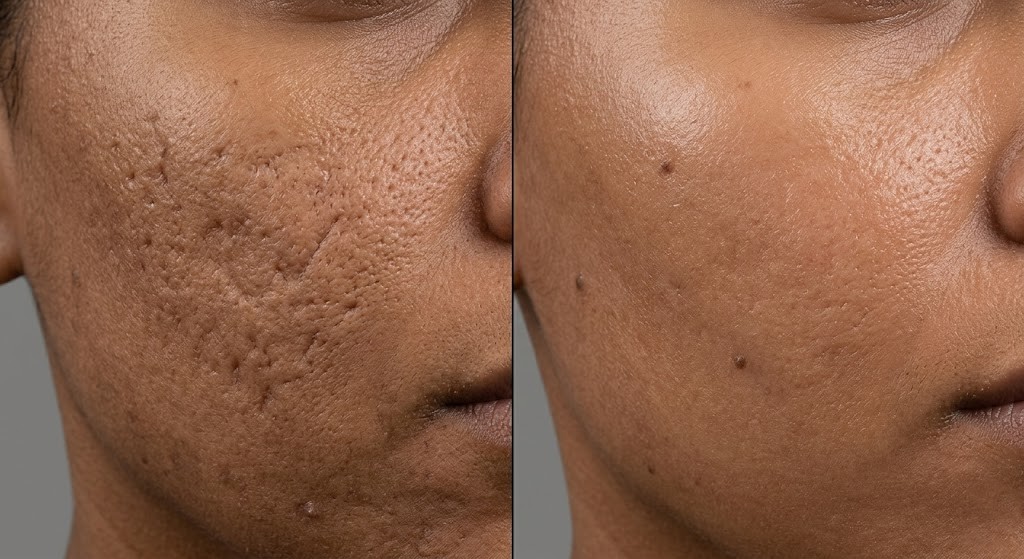
Yes, acne scar treatments are safe in Dubai year-round when proper post-care protocols are followed, including daily SPF 50+ and avoiding direct sun for 2 weeks.
Dubai’s climate—intense UV index, 40°C+ summer temperatures, and high humidity—raises legitimate concerns about aesthetic treatment safety. The key risks are:
- Post-inflammatory hyperpigmentation (PIH) triggered by UV exposure on freshly treated skin
- Infection risk from excessive sweating before the skin has healed
- Prolonged redness due to heat-induced vasodilation post-laser
How to Manage Treatment in Dubai’s Climate
Timing: Many Dubai residents schedule ablative procedures (fractional CO2, TCA peels) in winter months (November–February) when UV index is lower and outdoor activity is reduced. However, with proper sun avoidance, treatments are safely performed year-round.
Post-Treatment Protocol for Dubai:
- Apply SPF 50+ (broad-spectrum, PA++++) every morning—non-negotiable
- Avoid direct sun exposure for 14 days post-treatment
- Avoid swimming pools and steam rooms for 7–10 days post-laser
- Use mineral-based sunscreens (zinc oxide or titanium dioxide), which block all UV wavelengths
According to the British Journal of Dermatology, diligent sun protection after laser resurfacing reduces PIH risk by up to 75% in darker skin tones—a clinically significant finding for Dubai’s multicultural patient population.
At Rere Polyclinic, every post-procedure patient receives a detailed aftercare kit and a written protocol tailored to the Dubai environment.
FREQUENTLY ASKED QUESTIONS ABOUT ACNE SCAR TREATMENTS IN DUBAI
Q1: Can acne scars be completely removed in Dubai?
Complete removal isn’t always possible, but modern treatments in Dubai achieve 50–80% improvement in scar depth and texture across 3–6 treatment sessions.
Most patients achieve dramatic, life-changing improvement—not always 100% removal. Ice-pick scars are the hardest to treat fully and often require TCA Cross followed by fractional laser. Rolling and boxcar scars respond best to combination protocols. With realistic expectations and the right treatment plan, results are often transformative.
Q2: Is there a best age to treat acne scars in Dubai?
The best age to treat acne scars is after breakouts are fully controlled—typically from 20s onward—though treatments are safe for adults of any age.
Treating scars while active acne continues is counterproductive—new breakouts create new scars and interfere with healing. Our dermatologists first ensure acne is medically managed before beginning scar treatment. Patients in their 30s, 40s, and 50s can all benefit significantly, and collagen remodelling is effective at any adult age.
Q3: Which acne scar treatment has the least downtime in Dubai?
Microneedling and non-ablative laser toning have the least downtime—typically 1–2 days of redness—making them ideal for busy Dubai professionals.
For patients who can’t take time off work, microneedling (PRP or RF) and Nd:YAG laser toning allow most patients to return to office environments within 24–48 hours. Ablative fractional CO2 laser requires 5–7 days of visible redness and peeling—often scheduled before weekends or public holidays.
Q4: Do acne scar treatments work on dark skin tones in Dubai?
Yes—RF microneedling, subcision, and fractional Erbium laser are safe and highly effective for darker skin tones (Fitzpatrick IV–VI) common in Dubai.
Dubai’s population includes large South Asian, Arab, and African communities with Fitzpatrick Type IV–VI skin. These tones require careful treatment selection: RF microneedling, subcision, and Erbium laser are the safest and most effective options. Aggressive CO2 lasers without proper melanin management can cause PIH in darker tones. Our dermatologists are specifically trained in multicultural skin.
Q5: How do I choose the right acne scar clinic in Dubai?
Choose a DHA-licensed Dubai clinic with board-certified dermatologists, multiple laser technologies, and before/after documentation for your scar type.
The DHA mandates licensing for all aesthetic procedures. Key factors: dermatologist credentials (board-certified, not just a GP), device quality (FDA-cleared or CE-marked), personalised consultation (not one-size-fits-all pricing), and transparency in setting realistic expectations. Ask to see before/after photos for your specific scar type and skin tone.
CONCLUSION
Acne scars don’t have to be permanent. In Dubai 2026, Rere Polyclinic offers every evidence-based treatment—from fractional CO2 laser and RF microneedling to subcision, PRP, and TCA Cross—performed by DHA-licensed dermatologists with experience in all skin types.
The most important step is a proper scar assessment. Every scar type responds differently, and the right combination protocol makes all the difference.
Book your complimentary acne scar consultation at Rere Polyclinic, Dubai Jumeirah. Our dermatologists will map your scars, recommend your personalised treatment plan, and walk you through expected timelines and pricing—no obligation.