What Causes Premature Skin Aging? 7 Factors You Can Control
7 causes of premature skin aging in Dubai — explained by Rere Polyclinic's DHA-licensed dermatologists. Prevention tips + treatments. Book free consult.
Byadmin
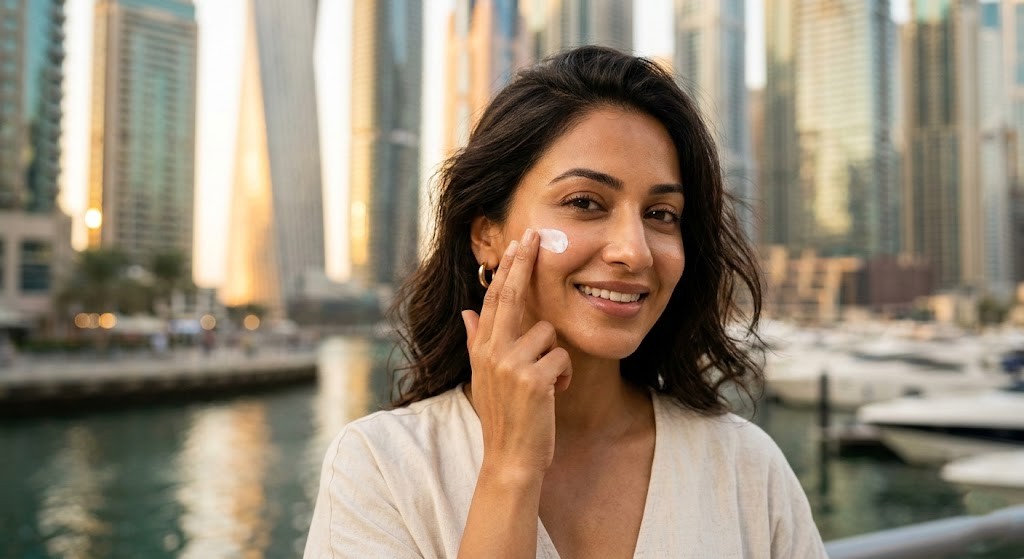
You step outside on a Tuesday morning in Dubai Marina. By 9 AM, the UV index is already at 8. You’re sweating before you reach your car. Then you spend eight hours in air-conditioning so cold you need a cardigan indoors. Sound familiar?
If you’ve noticed fine lines appearing earlier than expected, uneven skin tone, or a dullness that no amount of sleep seems to fix — Dubai’s environment could be playing a bigger role than you think.
Research published in Cell Transplant (Zhang & Duan, 2018) confirms that extrinsic (external) factors drive up to 97% of visible skin aging. Genetics? Responsible for just 3%. That means the vast majority of premature skin aging is preventable — if you know what’s causing it.
At Rere Polyclinic Dubai Jumeirah 1, our DHA-licensed dermatologists and aesthetic doctors see the effects of these 7 factors every day. This guide breaks each one down and shows you exactly how to fight back.
Factor 1: Why Is UV Exposure the #1 Cause of Premature Skin Aging?
| 💡 UV radiation causes up to 80% of visible facial aging by breaking down collagen and elastin fibers — a process called photoaging that accelerates in high-UV climates like Dubai. |
In Dubai, UV radiation isn’t a seasonal problem — it’s a 365-day daily threat. The UAE’s UV index frequently hits “extreme” levels (11+) from April through October. According to a systematic review published in Scientific Reports, over 80% of the wrinkles, sagging, and skin tone changes you see in the mirror are caused by sun exposure — not the natural aging process.
When UVA rays penetrate deep into the dermis, they trigger matrix metalloproteinases (MMPs) that physically degrade collagen and elastin. Research in Frontiers in Immunology (2024) confirms that UV-induced cell senescence accelerates the inflammatory cascade that ages skin at a structural level.
Dubai’s Hidden UV Multiplier: Sand and Glass Reflection
Desert sand reflects UV rays upward, amplifying your total UV exposure even when you’re standing in the shade. UVA rays also penetrate car windows and glass office facades, meaning your skin absorbs radiation during your morning commute, at your desk, and inside malls with large windows. Daily SPF 50+ broad-spectrum sunscreen isn’t optional in Dubai — it’s clinical necessity.
What Rere Polyclinic Recommends
For patients with existing UV damage — sun spots, uneven tone, or fine lines — our laser skin rejuvenation treatments address photoaging at the cellular level, stimulating new collagen production and targeting pigmentation caused by years of Dubai sun exposure.
Factor 2: How Does Air Conditioning Accelerate Skin Aging in Dubai?
| 💡 Air conditioning strips moisture from both the air and your skin, weakening the skin barrier and accelerating fine lines, flaking, and premature dullness over time. |
Dubai residents live in a humidity paradox: extreme heat outdoors, followed by ice-cold, moisture-sucking air conditioning indoors. According to Frontiers in Medicine (2024), chronic skin dehydration accelerates collagen degradation, reduces elasticity, and creates the appearance of deeper wrinkles by weakening the extracellular matrix (ECM).
Transepidermal water loss (TEWL) — water evaporating through your skin — increases dramatically in air-conditioned spaces. Once the skin barrier is compromised, every other aging factor hits harder: UV damage penetrates more easily, pollution particles settle deeper, and fine lines look more pronounced.
The AC-to-Sun-to-AC Loop
A typical Dubai day: cold AC in the car → intense UV heat outdoors → cold AC in the office → repeat. Each transition stresses your skin differently. Many of our patients are surprised to learn their indoor routine contributes just as much to skin aging as outdoor exposure.
HydraFacial: The Dubai Climate Solution
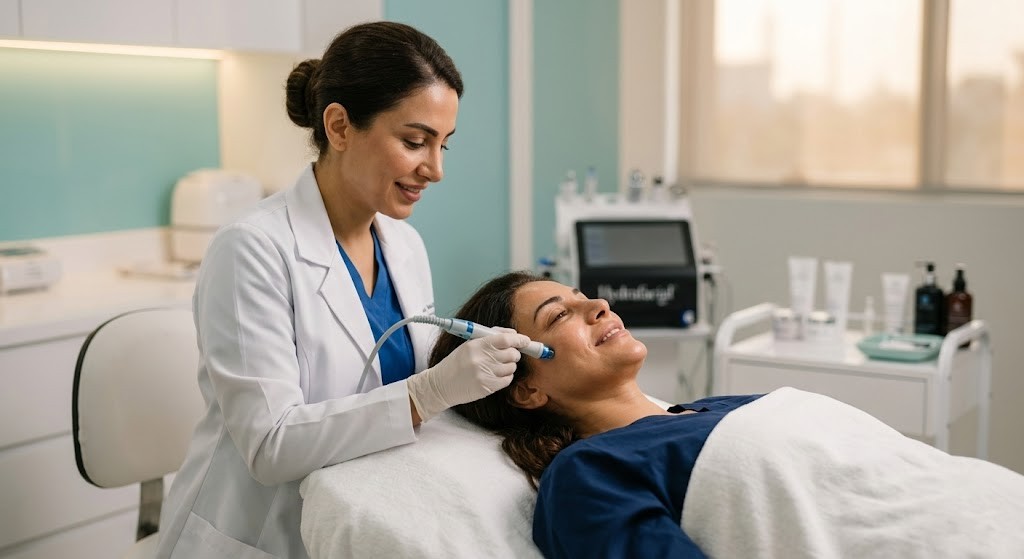
Our HydraFacial treatments are specifically suited to Dubai’s climate-related skin dehydration. The treatment cleanses, exfoliates, and infuses the skin with hyaluronic acid and antioxidants in a single session — directly counteracting moisture loss caused by constant AC exposure. Pair with a medical-grade hyaluronic acid moisturizer at home for lasting results.
Factor 3: What Role Does Air Pollution and Desert Dust Play in Aging Skin?
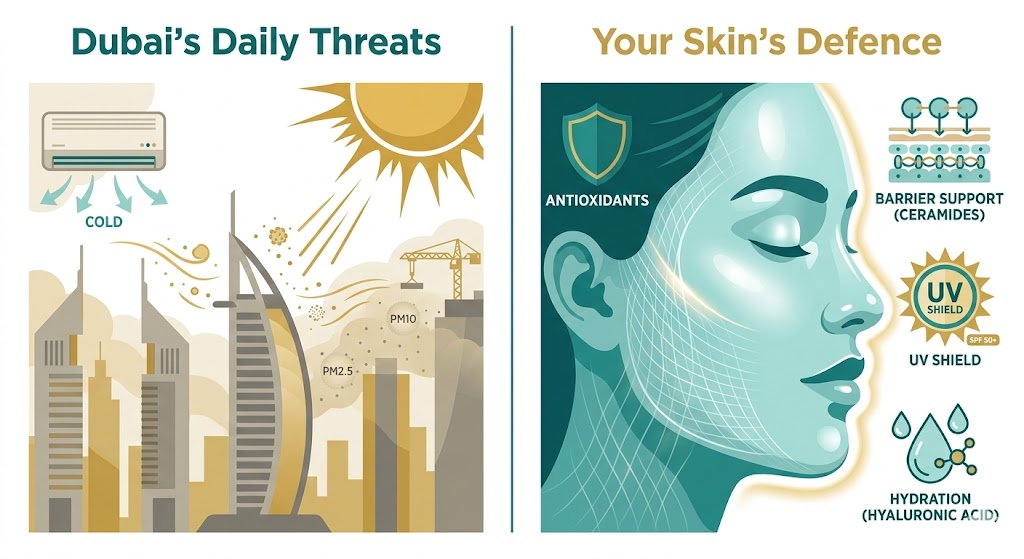
| 💡Air pollution and desert dust generate free radicals that damage skin DNA and break down collagen, causing dullness, enlarged pores, and accelerated aging visible within months. |
Dubai’s rapid urban development has created a dual pollution challenge: industrial and traffic-related airborne particles alongside fine desert sand dust. Research in Frontiers in Immunology (2024) confirms that pollutant particles penetrate skin pores and generate free radicals — unstable molecules that attack healthy skin cells, degrade collagen, and trigger chronic low-grade inflammation.
This oxidative stress pathway is particularly insidious because damage accumulates over time without obvious immediate symptoms. Many patients in their 30s and 40s are dealing with skin aging driven by years of pollution exposure they didn’t realize was happening.
The Free Radical Connection
Free radicals ‘steal’ electrons from healthy skin cells, triggering a chain reaction of cellular damage. Over time, this reduces skin’s ability to regenerate, creates dullness, and contributes to hyperpigmentation.
Antioxidant-rich skincare — particularly Vitamin C serums — neutralizes free radicals before damage occurs. Our chemical peel treatments also help reverse existing oxidative damage by accelerating cellular turnover and removing compromised surface layers.
Factor 4: How Does Sugar and Poor Diet Age Your Skin Faster?
| High sugar intake triggers glycation, producing AGEs (Advanced Glycation End-products) that cross-link and stiffen collagen fibers, directly causing wrinkles and reduced skin elasticity. |
When you consume excess sugar, the molecules attach to collagen and elastin proteins in a process called glycation, forming Advanced Glycation End-products (AGEs). According to research published in Current Aging Science (PMC), AGEs cross-link collagen fibers — making them stiff and brittle rather than smooth and elastic — directly causing sagging and wrinkling associated with older-looking skin.
A comprehensive review in the Journal of Cosmetic Dermatology (Wiley, 2024) further confirms that high-glycaemic diets, fried foods, and processed carbohydrates all accelerate AGE formation in dermal tissue. Dubai’s food culture — with an abundance of sweets, traditional rice dishes, and late-night dining — can create dietary habits that accelerate this process.
The Alcohol and Dehydration Link
Excessive alcohol consumption amplifies skin aging through severe skin dehydration. The Frontiers in Medicine study (2024) found that alcohol causes blood vessel dilation beneath the skin surface, leading to redness, puffiness, and loss of tone. Combined with Dubai’s heat, alcohol’s dehydrating effects hit harder than in cooler climates.
Anti-Aging Diet Fundamentals
A diet rich in antioxidants — resveratrol, Vitamin C, Vitamin E, curcumin — counteracts AGE formation and reduces oxidative damage. At Rere Polyclinic, we take a holistic approach: our specialists discuss dietary factors during consultations because no treatment can fully outrun a diet that’s actively aging your skin from the inside.
Factor 5: Does Smoking Really Age Your Skin That Much?
| 💡Yes. Smoking reduces blood flow to the skin, depletes Vitamin C essential for collagen synthesis, and exposes skin to thousands of toxins — accelerating wrinkle formation by 5–10 years. |
The evidence is overwhelming. Research in the Journal of Dermatological Science (Morita, 2007), cited in the Current Aging Science review, confirms that tobacco smoke triggers premature aging through multiple mechanisms: it reduces microvascular blood flow, depriving skin of oxygen; it generates free radicals directly in the skin; and it depletes Vitamin C by up to 40%, compromising new collagen production.
The result is a characteristic pattern of premature aging: deepened wrinkles around the mouth and eyes, a grayish complexion, and significantly accelerated collagen loss. Dermatologists can often identify smokers’ skin by texture and tone alone.
Reversing Smoking-Related Collagen Damage
Stopping smoking remains the most impactful change a patient can make. For those addressing existing damage, laser skin rejuvenation at Rere Polyclinic stimulates new collagen production, while medical-grade retinoids can accelerate cellular turnover and improve skin texture significantly within 3–6 months.
Factor 6: How Do Stress and Sleep Deprivation Show Up on Your Skin?
| 💡Chronic stress raises cortisol, which breaks down collagen and triggers inflammation. Poor sleep prevents nightly skin repair, causing visible aging 3x faster than in well-rested people. |
The Dubai lifestyle is high-performing by design — long hours, active social calendars, demanding business environments. Research from Fudan University (2024), analyzing facial aging data from over 300,000 women, found that mental stress lowers DNA methylation levels in skin cells, accelerating visible aging and increasing skin dullness significantly. Aging inflection points — crow’s feet, nasolabial folds — are now appearing 2 years earlier than a decade ago.
Cortisol — the primary stress hormone — breaks down collagen directly. It also triggers inflammatory pathways that accelerate cellular senescence throughout the skin, as confirmed in the Skinspan review published in PMC (2024). Sleep deprivation compounds this: most skin cell repair and collagen synthesis happens during sleep. Consistently under 7 hours disrupts these processes at a fundamental biological level.
The Dubai Professional’s Skin Challenge
Many of our patients at Rere Polyclinic are driven professionals who discover that lifestyle stress is the aging factor they’ve been overlooking. Professional treatments can accelerate the repair that stress and sleep deprivation have interrupted — but the most dramatic results always combine clinical care with lifestyle changes.
One patient — Sara, a 38-year-old finance professional from Business Bay — came to us with premature fine lines and persistent dullness. After a course of HydraFacial treatments combined with a tailored skincare routine and sleep hygiene protocol, she described looking ‘at least five years younger’ within three months.
Factor 7: What Happens When You Skip SPF and Neglect Your Skincare Routine?
| 💡Skipping daily SPF in Dubai accelerates photoaging 3–5x faster than in lower-UV climates. A missed routine allows daily UV, pollution, and dehydration damage to compound unchecked. |
Of all seven factors, this is the one fully within your control every morning. Pathophysiology research published on PubMed (Kang et al.) demonstrates that even a single session of UV exposure causes measurable collagen damage that takes months to repair. Dubai’s UV index exceeds 8 on average for nine months of the year, and UVA rays penetrate glass and clouds.
The most common mistakes our dermatologists observe: using SPF 30 instead of SPF 50+ broad spectrum; not reapplying after two hours outdoors; skipping sunscreen on cloudy days or when “mostly staying indoors”; and neglecting the neck, hands, and décolleté.
Building a Dubai-Specific Morning Routine
Vitamin C serum (morning) → moisturizer → SPF 50+ broad spectrum is the minimum morning routine for Dubai residents. Add niacinamide for pollution protection and barrier support. Retinol at night (2–3x per week) stimulates collagen production and accelerates cellular turnover. These aren’t luxury additions — in Dubai’s environment, they are medical recommendations from our DHA-licensed doctors.
When Home Routine Isn’t Enough
If you’re dealing with accumulated damage — uneven tone, persistent dullness, or early volume loss — book a free consultation at Rere Polyclinic for a personalized anti-aging plan. Our DHA-licensed dermatologists assess your specific skin profile, Dubai lifestyle, and goals before recommending any treatment.
Frequently Asked Questions About Skin Aging in Dubai
Q: At what age does premature skin aging typically start in Dubai?
Research from Fudan University’s 2024 study, analyzing 300,000+ women’s skin aging data, found that crow’s feet, nasolabial folds, and texture changes are appearing 2 years earlier than a decade ago — driven by lifestyle and environmental stress. In Dubai’s extreme UV environment, our dermatologists recommend beginning a preventive skincare routine with medical-grade SPF by age 22–25.
Q: Can premature skin aging be reversed, or only prevented?
Modern aesthetic medicine has advanced significantly. Laser skin rejuvenation, HydraFacial, and chemical peels can address existing damage at a cellular and structural level. The Skinspan review in PMC (2024) confirms that evidence-based aesthetic procedures demonstrably reverse hallmarks of skin aging including collagen loss and cellular senescence.
Q: Which single habit change has the biggest impact on skin aging in Dubai?
This is consistently supported by dermatological research and confirmed by our clinical experience. The Scientific Reports systematic review identifies sun exposure and smoking as the two factors with the strongest dose-response relationships to wrinkling — and sun protection is the only one you can act on every single morning.
Q: Does Dubai’s air conditioning really damage skin as much as the sun?
The compounding effect is what makes Dubai unique. Frontiers in Medicine (2024) confirms that dehydration reduces the skin barrier’s ability to resist environmental stressors, amplifying the impact of UV, pollution, and heat. When your skin barrier is compromised, every other aging factor hits harder — which is why hydration-focused treatments like HydraFacial are especially effective for Dubai residents.
Q: How often should Dubai residents see a skin specialist for anti-aging?
At Rere Polyclinic Dubai, we recommend an initial skin assessment to establish your baseline, followed by a customized treatment schedule. Many patients follow a quarterly rhythm — aligning treatments with Dubai’s seasonal transitions — for consistently healthy, youthful-looking skin year-round. Book your free skin consultation here to get started.
Take Control of Your Skin Aging Starting Today
The seven factors covered in this guide — UV exposure, air conditioning dehydration, pollution, poor diet, smoking, stress and sleep deprivation, and neglected SPF — are all within your power to address. The most important insight from the latest dermatological research: 97% of visible skin aging is driven by external, controllable factors. Your genetics are not your destiny.
Living in Dubai creates skin challenges that residents in cooler, lower-UV climates simply don’t face. But it also gives you access to some of the world’s most advanced aesthetic medicine, delivered by DHA-licensed specialists who understand exactly what Dubai’s environment does to your skin.
Whether you’re noticing the first fine lines in your late 20s, dealing with sun damage in your 40s, or simply want to protect what you have — the right time to start is now.
📞 Book Your Skin Consultation at Rere Polyclinic Dubai Jumeirah
Our DHA-licensed dermatologists provide personalized anti-aging plans based on your specific skin profile and lifestyle — not a one-size-fits-all protocol.